


FINE GEMSTONES
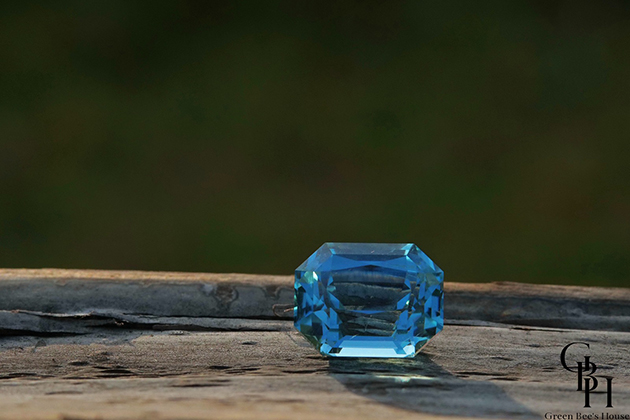
Aquamarine: The Ocean’s Pure Blue Treasure
Aquamarine derives its name from the Latin aqua marinus, meaning "sea water," in reference to its light blue hue that evokes ocean depths. This gem belongs to the beryl family, alongside emerald and morganite. With its captivating shades ranging from pale blue to crystalline lagoon green, has long been revered as a stone of tranquility and insight. Associated with the purity of ocean waters, this enchanting gemstone has been cherished by sailors, mystics, and collectors alike for centuries.
Historically, aquamarine was highly valued by ancient civilizations. Egyptians and Greeks considered it a protective talisman, especially for sailors who believed it ensured safe voyages across the sea. In ancient Rome, it was associated with Neptune, the god of the oceans, and was used to create seals and exquisite jewelry.
The earliest known sources of aquamarine trace back to Madagascar, which was once a major producer. Today, Brazil is the primary source of this gem, particularly for its intense blue crystals. Other deposits exist in Asia, Africa, Pakistan, Afghanistan, Russia, Tanzania, and Zambia.
Symbolizing serenity, clarity, and harmony, aquamarine is not only prized for its beauty but also for the sense of calm and renewal it is believed to inspire.
The hardness of aquamarine ranges between 7.5 and 8 on the Mohs scale, making it relatively hard and suitable for various types of jewelry. Unlike emeralds, aquamarines typically have fewer inclusions, resulting in better overall clarity and durability. This makes aquamarine a more resilient gemstone, with good toughness and resistance to breakage. Today, aquamarine remains a popular choice for fine jewelry, including rings, necklaces, and earrings.
Aquamarine is renowned for its serene and refreshing hues, ranging from pale blue to deep sea-green. The gemstone's color is primarily influenced by trace amounts of iron within its crystal structure, which determines the intensity and shade of blue. While the most sought-after aquamarines exhibit a vivid, pure blue, some stones display a greenish-blue tint, reminiscent of tropical waters.
Historically, darker blue aquamarines have been the most sought-after, particularly those from Brazil, which produces some of the finest specimens. The Santa Maria aquamarine is famous for its deep, intense blue shade. However, aquamarines with a lighter, pastel blue are also highly valued for their delicate and ethereal beauty.
The value of an aquamarine is determined by its color, clarity, cut, and carat weight. The most prized exhibit a vivid blue color with excellent transparency and minimal inclusions.
Aquamarine, the birthstone for March, has long been treasured across cultures for its association with serenity, courage, and mental clarity. Linked to the Pisces and Aries zodiac signs, it is believed to enhance intuition and emotional stability, making it a meaningful gem for those seeking inner harmony.
Its tranquil blue hues evoke the soothing essence of water, reinforcing aquamarine’s reputation as a gemstone of peace and renewal. Celebrated for its purifying energy, it is thought to alleviate stress, promote relaxation, and support clear communication. Some practitioners also value aquamarine for its ability to heighten spiritual awareness, making it a favored stone for meditation. Physically, it is believed to aid respiratory health, vision, and hormonal balance.
Aquamarine is more than just a beautiful gemstone; it is imbued with history, culture, and symbolism. Its serene color and durability make it a cherished addition to any collection. Whether worn as a statement piece or admired for its calming properties, aquamarine continues to enchant and inspire those who gaze upon it.
Alexandrite: The Enigmatic Color-Changing Gemstone
Alexandrite derives its name from Tsar Alexander II of Russia, in honor of whom this gem was discovered in the Ural Mountains in the 1830s. This enchanting gemstone, belonging to the chrysoberyl family, is famed for its remarkable color-changing properties, shifting from green in daylight to red under incandescent light. Revered for its rarity and unique optical phenomena, alexandrite has fascinated gem enthusiasts and collectors alike for centuries.
Chrysoberyl, or « golden beryl », derived from the Greek khrusos (gold), has been known since antiquity. Today, its most sought-after varieties are alexandrite and cat’s eye chrysoberyl.
Historically, discovered in the Urals in 1830, alexandrite was named in honor of Tsar Alexander II, as its red and green hues mirrored the national military colors of Imperial Russia. It became highly prized among the Russian elite and was considered a symbol of prestige and patriotism.
For many years, Russia remained the primary source, producing some of the finest specimens. However, as deposits were depleted, new mining sites emerged in Brazil, Sri Lanka, Madagascar, and Tanzania, contributing to the global supply of this captivating gemstone. Brazilian alexandrites, in particular, are renowned for their vivid color change and exceptional clarity.
Alexandrite, rated 8.5 on the Mohs scale, combines strength and brilliance, making it an ideal gemstone for various jewelry pieces, including rings, necklaces, and earrings, ensuring their longevity.
Alexandrite is renowned for its astonishing ability to change color depending on the light source. In daylight, this gemstone typically exhibits a green hue, while under incandescent light, it transforms to a red or purplish-red. This mesmerizing phenomenon is due to the presence of chromium within its crystal structure, which absorbs light differently based on the wavelength. The most prized specimens exhibit a dramatic color shift with excellent transparency and minimal inclusions.
Alexandrite, June’s birthstone, has been cherished across cultures for its links to intuition, creativity, and transformation. Associated with Gemini and Cancer, it is said to foster emotional balance and discernment. Known for its energizing and purifying properties, it is thought to inspire imagination, enhance harmony, and sharpen clarity of thought. Physically, it is believed to support regeneration, aid detoxification, and boost vitality.
Alexandrite, with its incredible color-changing ability and durability, makes it a cherished addition to any collection. Symbolizing transformation, balance, and prosperity, alexandrite is prized not only for its aesthetic appeal but also for the sense of wonder and intrigue it inspires.
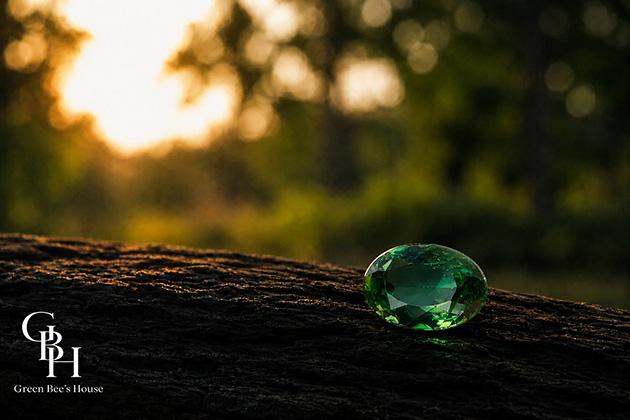
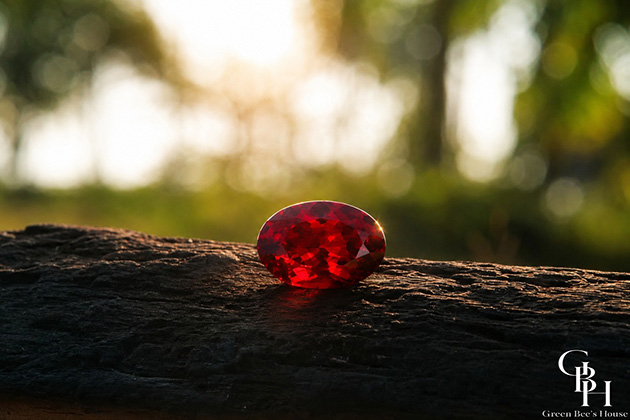
Almandine: The Deep Red Garnet Gemstone
Almandine prized for its rich, deep red color, is a member of the garnet family that captivates with its fiery brilliance and grounding energy. This gemstone has been treasured for centuries and can be found in both ancient jewelry and modern collections. Almandine garnets are known for their durability and brilliance, making them a popular choice for a range of adornments.
The name "Almandine" is derived from Alabanda, an ancient city located in Asia Minor, where the gemstone was first fashioned in antiquity. Throughout history, almandine garnet has adorned royal jewelry, particularly during the Victorian era, symbolizing prestige and refinement.
In religious traditions, it was incorporated into ecclesiastical ornaments, valued for its deep red hue and perceived protective qualities. Ancient civilizations, including the Egyptians and Romans, treasured almandine for its beauty and durability, often using it in jewelry and ceremonial artifacts.
Almandine deposits are found across the globe, with notable sources including India, Sri Lanka, Brazil, Madagascar, China and the United States. Brazil is renowned for its high-quality stones, while India produces striking gradient gems. Each region offers unique variations in color and clarity, making almandine a globally treasured gemstone.
Almandine has a hardness rating of 6.5 to 7.5 on the Mohs scale, making it quite durable and suitable for various type of jewelry. However, almandine can be susceptible to scratching and chipping if not handled with care.
One of the defining features almandine is its range of warm colors, ranging from deep red to purplish-red or reddish-brown. The gemstone’s striking color is attributed to its iron and manganese content, infusing it with a natural luminosity, giving it a warmth and intensity that captivates the eye. Some specimens may exhibit a subtle star-like effect, known as asterism, which adds to their allure.
The most prized almandines exhibit a vivid primary red color with minimal secondary hues. These almandines possess a medium to dark tone, enhancing their depth of color. Eye-clean stones meeting these color standards command the highest market prices.
Proper storage is essential to maintain its deep color.
Almandine garnet is the birthstone for January and is traditionally associated with Capricorn and Aquarius zodiac signs.
In lithotherapy, almandine is said to inspire love, courage, and strength. It is believed to ground energies, fostering stability and emotional balance, while also promoting vitality and passion. Physically, it is thought to support good circulation and boost energy levels.
Almandine garnet, with its rich, red tones and its enduring beauty, is believed to enhance creativity and ignite the flames of desire making it a powerful and timeless gem that captures the imagination. Whether adorning contemporary designs or historic pieces, almandine continues to be admired for its fiery elegance.
Amethyst: The Mystical Jewel
Amethyst, with its captivating purple hues, has long been treasured for its beauty and mystical properties. A distinguished member of the quartz family, this gemstone owes its vibrant color to traces of iron and manganese, making it one of the most sought-after jewels in history.
Amethyst has a rich history connected to both royalty and the Church. In royal circles, amethyst was once as valuable as rubies and emeralds. Its purple hue was associated with nobility and power, particularly because violet was a rare and expensive color to produce. European monarchs, such as the kings of England and France, often wore jewelry adorned with amethysts to symbolize their authority and prestige.
In religious traditions, amethysts were widely used in ecclesiastical ornaments. It was favored by bishops and cardinals, who wore it in rings and pendants. The gemstone was believed to promote spiritual clarity and protect against intoxication—a belief that dates back to antiquity. In Christianity, purple is a significant liturgical color, used especially during Lent and Advent, reinforcing the connection of amethyst to spirituality and meditation.
The earliest known amethyst deposits were mined in ancient Greece, where the gemstone was believed to prevent intoxication. This belief is reflected in the name "amethyst," derived from the Greek word amethystos, meaning "not drunk." Amethyst has also been revered by ancient civilizations, including the Egyptians and Romans, who attributed it mystical and protective qualities.
Today, the finest amethysts originate from Brazil, home to the legendary Minas Gerais mines. Brazilian amethysts are celebrated for their rich saturation and clarity, making them the benchmark of quality in the gemstone world. Other significant sources include Uruguay, known for its deep purple amethysts, and Zambia, which produces vibrant, bluish-purple stones. Madagascar, Russia, and South Korea also contribute to global amethyst production, each region offering distinctive variations in hue and clarity.
In Christianity, purple is a significant liturgical color, used especially during Lent and Advent, reinforcing the connection of amethyst to spirituality and meditation.
The hardness of amethysts is rated at 7 on the Mohs scale, making them relatively durable and suitable for various types of jewelry. However, amethysts can be susceptible to scratching and chipping if not handled with care. Heat and prolonged exposure to sunlight can also cause the color to fade, so it is essential to store them properly.
One of the most defining features of amethysts is their color zoning. Unlike many other gemstones, amethysts can display various shades of purple within the same stone, ranging from pale lilac to deep violet. This unique characteristic provides a natural fingerprint that can be used to identify individual stones.
The most prized amethysts exhibit a vivid primary purple color with no more than 15% of any secondary hue, such as red or blue. These amethysts also possess a medium to dark tone, which enhances their depth of color. Eye-clean stones that meet these color standards command the highest prices in the market.
Amethyst, the birthstone for February, has long been associated with tranquility, clarity, and spiritual growth. It is revered for its soothing purple hues, symbolizing peace and balance.
In lithotherapy, amethyst is believed to support emotional healing, enhance intuition, and promote restful sleep. This gemstone is said to aid in meditation and protect against negative energies. Amethyst is also thought to support sobriety, clear thinking, and decision-making.
Historically, amethyst has been regarded as a stone of nobles, inspiring creativity and courage. Some traditions even attribute protective qualities to amethyst, believing it can shield against evil and bring good fortune.
With a history steeped in royalty, mythology, and trade, amethysts continue to be symbols of refinement. Their journey from ancient mines to modern-day masterpieces attests to their enduring appeal. Whether valued for their vivid color, unique zoning, or the skilled craftsmanship required to cut and polish them, amethysts embody the elegance of nature’s artistry, a perfect blend of beauty and mystery.
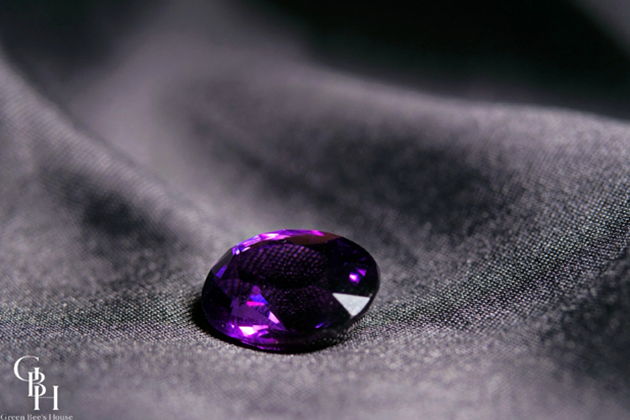
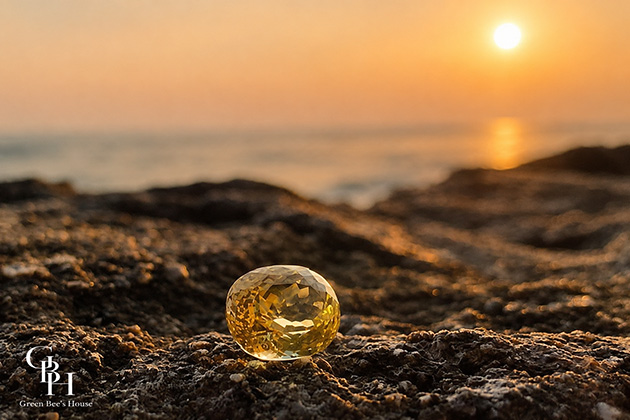
Citrine: Gem of Sunshine and Prosperity
Radiating the warmth of sunlight, citrine is a cherished member of the quartz family that captivates with its golden brilliance and uplifting energy. Celebrated for centuries, this radiant stone has been prized not only for its striking beauty but also for its association with prosperity, creativity, and vitality.
Citrine has a rich history intertwined with royalty and spiritual traditions. In royal circles, citrine was highly prized for its vibrant color, symbolizing the sun and the power of life. European monarchs often wore citrine jewelry to represent their strength and vitality.
In religious lore, citrine was often used in ecclesiastical ornaments. It was favored by spiritual leaders who believed it to promote enlightenment and protect against negativity. Ancient civilizations, including the Egyptians and Romans, regarded citrine as a powerful healing stone, attributing to it various therapeutic qualities.
Today, the finest citrines originate from Brazil, which is renowned for its high-quality, naturally colored stones. Other significant sources include Bolivia, known for its beautiful gradient citrines, and Zambia, which produces vibrant yellow stones. Russia, France, and Madagascar also contribute to the global production of citrine, each region offering distinctive variations in hue and clarity.
Citrine has a hardness rating of 7 on the Mohs scale, making it quite durable and suitable for various types of jewelry. However, citrine can be susceptible to scratching and chipping if not handled with care. Prolonged exposure to sunlight can also cause the color to fade, so proper storage is essential.
One of the defining features of citrine is its range of warm colors. Its vibrant hue is the result of traces of iron, infusing it with a natural luminosity. Citrine can display various shades of yellow within the same stone, ranging from pale yellow to deep amber. This characteristic provides a natural fingerprint that can be used to identify individual stones.
The most prized citrines exhibit a vivid primary yellow color with minimal secondary hues. These citrines possess a medium to dark tone, enhancing their depth of color. Eye-clean stones meeting these color standards command the highest market prices.
Citrine, the birthstone for November, has long been associated with prosperity, success, and positivity. It is revered for its sunny hues, symbolizing joy and abundance.
In lithotherapy, citrine is believed to support emotional balance, enhance creativity, and promote motivation. This gemstone is said to aid in manifesting personal desires and attracting wealth. Citrine is also thought to support mental clarity, improve energy levels, and foster a positive outlook.
Historically, citrine has been regarded as a stone of abundance, inspiring confidence and enthusiasm. Some traditions attribute protective qualities to citrine, believing it can shield against negative energies and bring good fortune.
Radiating light and energy, citrine captivates with its sunlit glow and vibrancy. A symbol of warmth and optimism, it embodies both beauty and positivity. Whether admired for its dazzling charm or its reputed virtues, this luminous gemstone continues to fascinate.
Jade: The Gem of Myths and Legends
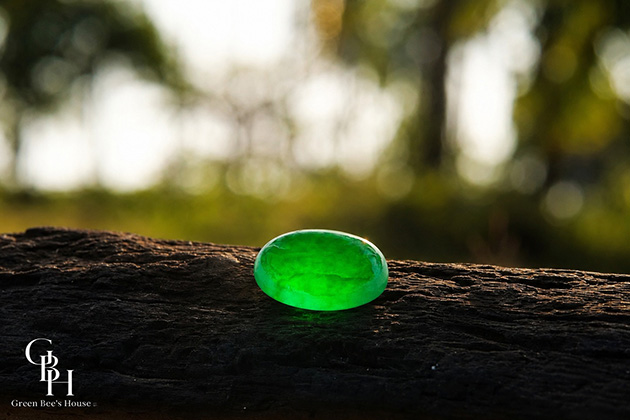
Jade, renowned for its captivating green hues and cultural significance, is a gemstone that has held a place of honor in human history for millennia. Treasured for its beauty, symbolic value, and durability, jade is often associated with harmony, balance, and prosperity. From ancient rituals to modern collections, it continues to enchant and inspire.
The name "Jade" encompasses two minerals: jadeite and nephrite and dates back to the time of the Spanish conquest of Central and South America. Its name comes from the expression piedra de ijada, literally meaning 'stone of the flank,' as it was regarded as a talisman believed to relieve kidney pain.
Its cultural roots lie in regions such as China, Central America, and New Zealand, where it was historically prized for its spiritual and artistic applications. In China, jade has been regarded as "the stone of heaven," symbolizing purity and virtue, and extensively used in carvings, talismans, and imperial ornaments.
Jade was also highly revered by the Maya and Aztec civilizations, who considered it more valuable than gold, often using it in ceremonial masks and jewelry. Māori people of New Zealand, on the other hand, crafted nephrite jade into tools, weapons, and pendants known as pounamu, which hold profound cultural significance.
Major sources of jadeite include Myanmar (Burma), Guatemala, and Japan, while nephrite is found in China, New Zealand, Russia, and Canada. Each deposit offers unique characteristics in color, texture, and translucency, adding to the allure of this gemstone.
The French mineralogist Alexis Damour, through his research conducted between 1846 and 1863, identified two types of jade: jadeite, which belongs to the pyroxene group and has a hardness of 6.5 to 7, and nephrite, classified among the amphiboles with a hardness of 6 to 6.5.
Their toughness, however, is exceptional, making jade a durable gemstone. This quality has enabled artisans to create intricate carvings that withstand the test of time.
Jade is celebrated for its shades of color, ranging from vibrant green to soft white, culminating in a delicate lavender hue. Its coloration is influenced by the presence of trace elements such as chromium and iron. High-quality jadeite exhibits a rich, translucent green, while nephrite tends to display softer, opaque tones. Only the finest specimens, displaying a transparent green reminiscent of emerald, earn the prestigious designation of “Imperial Jade”, considered the most valuable and desirable.
Proper storage and care are essential to preserving jade's natural beauty and sheen.
Jade is not traditionally assigned as a birthstone but is highly valued in holistic practices and lithotherapy. It is believed to bring harmony, balance, and protection to its wearer, fostering emotional well-being and physical vitality.
In traditional Chinese medicine, jade has been associated with longevity and healing, believed to support kidney health and the body's detoxification process. Its energy is said to promote wisdom, tranquility, and a connection to nature.
Jade, with its rich cultural heritage and enchanting hues, remains a symbol of elegance and spirituality. Whether showcased in ancient carvings or contemporary jewelry, jade's timeless beauty and enduring significance make it a gemstone that continues to captivate hearts across the world.
Opal: A Dance of Fire and Light
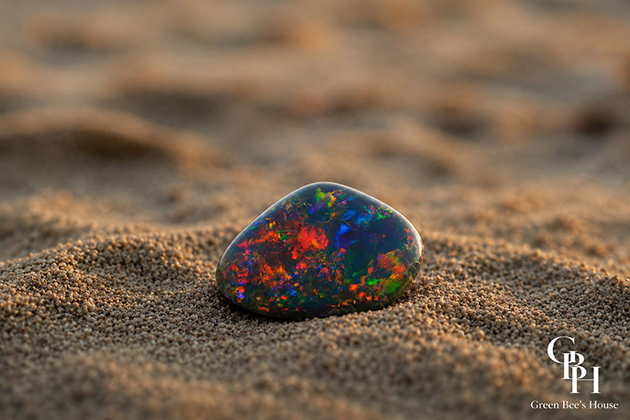
Opal is more than a gemstone—it’s a living canvas of shifting hues and ethereal glow. Its mesmerizing play of color, reminiscent of captured stardust, has enchanted civilizations for centuries, adorning everything from ancient talismans to contemporary masterpieces. With each movement, opal reveals a kaleidoscope of colors, making it a symbol of creativity, mystery, and transformation. Whether set in fine jewelry or preserved as a rare collector’s piece, its hypnotic beauty makes each opal a singular enigma — each one unveiling a unique story, ever in motion.
The name “Opal” finds its roots in the Latin opalus (opal), which itself stems from the Sanskrit upala, meaning “precious stone.” In ancient Rome, opals symbolized hope and purity, while in the Middle Ages, they were venerated for their attributed magical powers, believed to enhance clairvoyance and bring good fortune.
Most of the the world's opal comes from Australia, which has been the leading producer since the 19th century, supplying around 95% of global opal. Famous Australian opal fields include Coober Pedy, Lightning Ridge, and Andamooka, known for their high-quality black and white opals. Ethiopia has also emerged as a significant source, particularly with the discovery of “Wollo opals” in 2008, which display vivid play-of-color. Other notable sources include Mexico, famous for its fiery orange opals, and Hungary, which historically produced opals prized in Europe.
Opal has a hardness rating of 5.5 to 6.5 on the Mohs scale, making it less durable compared to other gemstones. While opals require careful handling to prevent scratching or cracking, their beauty makes them worth the extra care. Opal can also dehydrate over time, requiring special care to preserve its beauty and condition.
Opals are renowned for their incredible chromatic palette, ranging from milky white and soft pastels to vibrant shades of orange, red, green, and blue. Their unique iridescence is caused by the diffraction of light through microscopic silica spheres within the stone, creating a kaleidoscopic effect.
The most prized opals exhibit a vibrant and consistent play-of-color, with flashes of red being particularly rare and valuable. Black opals are highly sought after for their deep, dramatic tones juxtaposed with brilliant color flashes.
Commonly Found Opals
• White Opal – The most abundant type, featuring a milky or pale base with subtle play-of-color.
• Common Opal – Also known as "potch," it lacks play-of-color but comes in various pastel shades.
• Matrix Opal – Found within host rock, often displaying veins of opal intertwined with ironstone or sandstone.
Mid-Range & Unique Varieties
• Boulder Opal – Embedded in ironstone, offering striking contrasts between the opal and its host rock.
• Fire Opal – Known for its vivid orange, red, or yellow hues, often found in Mexico. Some display play-of-color.
• Crystal Opal – A transparent or translucent opal with brilliant flashes of color.
Highly Prized Opals
• Black Opal – The rarest and most valuable, featuring a dark body tone that enhances its vibrant play-of-color. Found mainly in Lightning Ridge, Australia.
• Ethiopian Welo or Wollo Opal – A newer discovery, prized for its intense color play and hydrophane properties.
• Harlequin Opal – Exceptionally rare, displaying a mosaic-like pattern of vibrant colors.
• Contra Luz Opal – A transparent opal that reveals its play-of-color when light passes through it.
Opal is the birthstone for October and is traditionally associated with Libra and Scorpio zodiac signs.
In lithotherapy, opal is believed to inspire creativity, amplify emotions, and promote self-expression. It is said to enhance love and passion while fostering a sense of optimism and joy. Physically, opals are thought to support hydration and improve skin conditions.
Opal is an ever-changing spectacle of light, a reflection of nature’s artistry. Each opal, unique in its dance of colors, carries its own story, shifting like a dream caught in stone. Admired across centuries and cultures, the opal, with its dazzling play of colors, graces both the jewels of the past and today’s artistic expressions. Its iridescent brilliance continues to captivate hearts and minds, proving that beauty is not static, but ever in motion.
Paraíba: An electric soul in the whisper of the ocean
In the world of gemstones, few possess the power to suspend time like the Paraíba. Its electrifying hues ripples in waves of neon blue and green, echoing sun-drenched tropical lagoons. Discovered in the 1980s, it redefined the chromatic codes of luxury, introducing a dazzling and unprecedented visual language. Each stone resonates like a suspended note, welcoming the light and revealing flashes of brilliance with every motion — like a living spark. Rare, intense, magnetic: collectors seek it, designers interpret it, connoisseurs celebrate it. A distinguished member of the tourmaline family, the Paraíba shares the group’s extraordinary color spectrum, yet stands apart — bold and radiant, like lightning sealed within crystal.
The name “Paraíba” comes from the Brazilian state where this extraordinary gem was first discovered in 1989. The early mines near São José da Batalha unveiled tourmalines with incomparable neon blue and green hues. Since that initial find, similar copper-bearing tourmalines have also been unearthed in Mozambique and Nigeria. However, only those originating from their historic source in northeastern Brazil meet the strictest definition of true “Paraíba” stones. These gems have captivated the world, stirring such desire that they now rank among the most valuable colored gemstones. Their rarity is astounding: for every 10,000 diamonds extracted, only one Paraíba tourmaline is found.
Paraíba tourmaline registers at 7 to 7.5 on the Mohs scale, offering good durability for everyday wear. Care should still be taken to protect its vibrant color and clarity. Tourmaline is generally resistant to scratches, but its crystalline structure means it can fracture if struck.
Paraíba tourmalines are renowned for their electric blue, turquoise, and vivid green hues, often described as “neon” colors that evoke tropical waters. Their distinctive brilliance is attributed to the presence of copper, and occasionally manganese, which produces a striking inner glow. High-quality stones display richly saturated tones and remarkable clarity. The rarest specimens reveal pure, vibrant shades of blue or blue-green, with exceptional luminosity. Brazilian origin, especially from the State of Paraíba, remains the most coveted, prized for its characteristic neon palette—blending electric blue with vivid green.
Paraíba tourmaline is not a traditional birthstone but is cherished for its vibrant energy and rarity. In crystal healing and lithotherapy, Paraíba is believed to inspire creativity, invigorate the spirit, and encourage clear communication. It is said to foster joy, self-confidence, and a sense of renewal.
Paraíba tourmaline is an ever-radiant spectacle of neon light, a nature’s artistry at its most vibrant. Each stone, unique in its dazzling dance, tells a tale of fire and water suspended in the purity of crystal. Admired by gem lovers and collectors worldwide, Paraíba continues to captivate hearts and minds, proving that beauty can be as electrifying as it is rare. The Paraíba remains unquestionably one of the most remarkable specimens. Each piece captures a flicker of tropical light and movement — a vivid symbol of brilliance, rarity, and natural elegance.
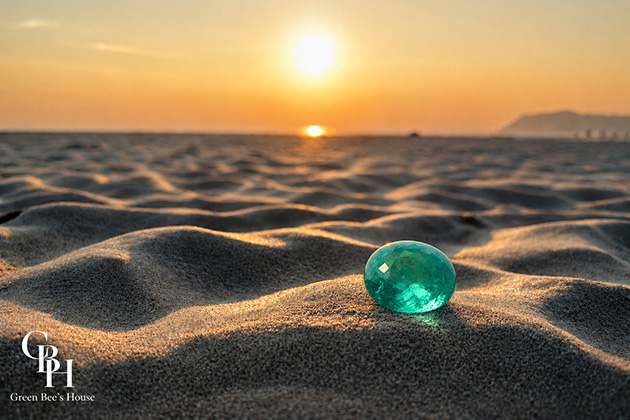
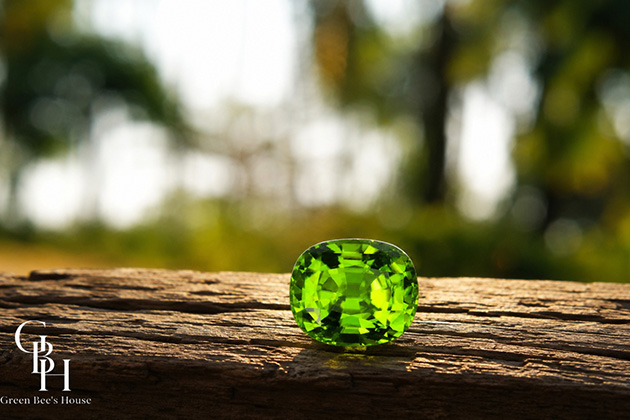
Peridot: Radiance in a Cooling Shade
Among captivating gemstones, peridot shines with a luminous, verdant energy that evokes sunlit meadows and olive groves at the peak of summer. Each gem captures the warmth of the sun, shimmering with golden-green reflections as though a fragment of stardust had nestled within. Though peridot belongs to the olivine mineral group, it stands alone for its clarity and effulgent color—nature’s bottled sunshine, both ancient and ever-fresh.
The name “Peridot” is generally believed to derive from the Arabic faridat, meaning “gem.” Though its linguistic origins remain partially obscured, this evocative name has long adorned a stone prized for its vibrant green hue and timeless charm. Peridot is also known as “Chrysolite,” from the Greek for “golden stone,” a term once used to refer to various gems of similar coloration. The term “olivine,” alluding to the olive-green shade of peridot, is likewise used in mineralogy.
Known since antiquity, peridot has adorned pharaohs and inspired legends, appreciated for its pure, green radiance and its association with light. Historically, it was mined on the Egyptian island of Zabargad (St. John’s Island) in the Red Sea as far back as 1500 BCE, where it was considered the “gem of the sun.” It was the Crusaders who brought peridot to Central Europe. Peridot has graced royal jewelry, talismans, and sacred objects, symbolizing abundance and protection for centuries. It was also the most prized gemstone of the Baroque era. Today, significant sources include the United States (Arizona), Myanmar (Burma), Pakistan, Brazil, Australia and China. Although found worldwide, the finest specimens are often traced to high-altitude mines in Pakistan and Myanmar, where crystals form under immense geological pressure.
Peridot ranks 6.5 to 7 on the Mohs scale, offering moderate durability suitable for most jewelry. While resistant to daily wear, it can scratch more easily than harder gems and is sensitive to rapid temperature changes. Proper care ensures its bright, cheerful color stays undimmed.
Known for its unique and vibrant green, peridot owes its color to the presence of iron within its crystal structure. Unlike many other gems, its hue is intrinsic, never enhanced by treatments. Shades range from fresh yellow-green to deep olive, with the most prized stones displaying a pure, grassy green free of brown or yellow overtones. Shimmering peridot and star peridot are rarer. The luminosity of peridot recalls sunlight filtering through new leaves—bright, inspiring, and alive with energy.
Peridot is August’s traditional birthstone and is cherished for its uplifting properties. In lithotherapy, peridot is thought to promote well-being, dispel negative emotions, and encourage renewal and growth. It symbolizes abundance, harmony, and the gentle unfolding of the heart.
Peridot is a gemstone that radiates joy and renewal, a celebration of nature’s brilliance and warmth. Treasured by gem collectors and jewelry enthusiasts alike, it remains a timeless embodiment of vitality, positivity, and the soothing beauty of green. A piece of peridot carries with it the promise of sunny days and the quiet strength of the natural world.
Pyrope: Ember Essence from the Earth’s Depths
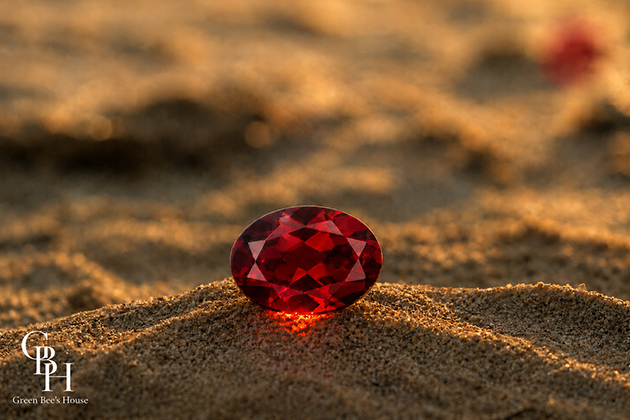
Among the enchanting members of the garnet family, pyrope stands out with its rich, fiery red hues, reminiscent of glowing embers caught in twilight. Each stone captures both mystery and warmth, shimmering with deep, velvety tones that evoke the heart of a blazing fire. Pyrope is celebrated for its clarity, intensity of color, and timeless elegance.
The name “pyrope” derives from the Greek pyropos, literally meaning “fire” and “eye,” evoking a fiery appearance, a fitting tribute to its vibrant red coloration. Revered since antiquity, it has adorned ancient jewelry, talismans, and crowns, symbolizing passion and protection. Garnet jewelry, especially pyrope, was prized by Roman and Egyptian civilizations, often fashioned into seals and amulets believed to ward off evil.
Pyrope garnets are commonly sourced from regions with a rich geological heritage. Notable localities include the Czech Republic (Bohemia), South Africa, the United States (Arizona), China, Madagascar, Sri Lanka, and Tanzania.
Pyrope rates 6.5 to 7.5 on the Mohs scale, making it a durable choice for daily-wear jewelry. Its robust structure resists most scratches, but care should still be taken to avoid harsh impacts. Pyrope’s resilience ensures that its glowing crimson beauty remains vivid for generations.
Pyrope’s defining feature is its beautiful, transparent red color, ranging from pure, deep crimson to brownish-red. Pyrope rarely has inclusions, resulting in stones with exceptional clarity. The intensity of its color comes from the presence of magnesium and aluminum in its crystal structure. The most prized specimens display a pure, vibrant red, sometimes with undertones of purple or orange. The classic “Bohemian garnet” jewelry of the 19th century often featured the intense, deep-red pyrope from Central Europe, prized for its saturated color and brilliance. Its sparkle, luster, and fire have made this fine gemstone a beloved choice for both classic and contemporary jewelry.
As a traditional January birthstone, pyrope is cherished for its invigorating and protective qualities. In crystal healing practices, it is believed to inspire courage, energy, and a sense of security. It symbolizes passion, love, and the enduring strength of the heart.
Pyrope garnet is a gemstone prized for its vivid red hue, exceptional brilliance, combining beauty and strength, an ideal choice for long-lasting jewelry designs. Historically venerated since antiquity, even today it continues to fascinate collectors and connoisseurs, celebrated for its intense deep color, but also for its symbolic resonance: strength, passion and the eternal flame. it is a story of fire, endurance, and timeless elegance.
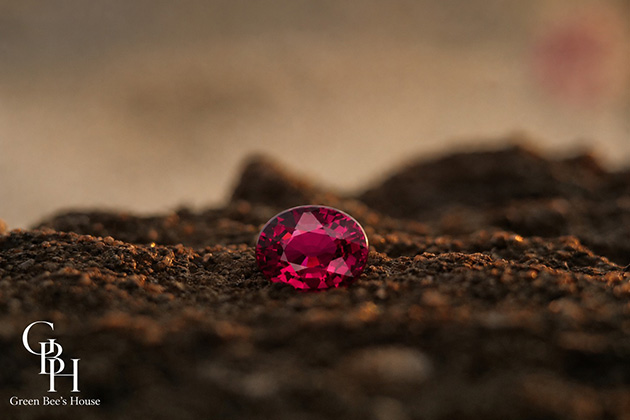
Rhodolite: The Rose-Tinted Sparkle from the Heart of Garnet
Among the captivating varieties of the garnet family, rhodolite dazzles with its unique blend of rose and violet tones, reminiscent of a sunset reflecting on tranquil waters. Each gemstone radiates both romance and serenity, shimmering with luminous hues that evoke a sense of gentle warmth. Rhodolite is renowned for its exceptional clarity, distinctive color, and timeless sophistication.
Rhodolite, a captivating rose-pink to purplish-red variety of garnet, was first identified in the Cowee Valley of North Carolina, USA — a region renowned for its gem-quality pyrope-almandine blends. The name “rhodolite” stems from the Greek rhodon, meaning “rose,” evoking the gem’s delicate yet vivid hues. Today, significant deposits are found across the Mozambique Belt, a geologically rich zone spanning countries such as Tanzania, Madagascar, Kenya, and Mozambique, as well as in Sri Lanka, India, Brazil, and Norway.
Historically, rhodolite has been cherished not only for its beauty but also for its symbolic resonance. Ancient lore suggests it was used as a talisman, believed to glow in darkness and protect its wearer from harm. Its natural brilliance and clarity, often free from visible inclusions, have made it a favored stone in fine jewelry and a testament to nature’s artistry shaped over millennia.
Rhodolite rates 7 to 7.5 on the Mohs scale, making it an excellent choice for everyday jewelry. Its durable crystal structure provides resistance to scratches and wear, though care should still be taken to avoid sharp blows or extreme conditions. The robust nature of rhodolite ensures that its radiant beauty will endure through generations.
Rhodolite captivates with its remarkable clarity, luminous glow, and richly saturated hue. Its geological formation stems from a natural blend of pyrope and almandine garnets, which gives rise to its distinctive coloration. The presence of magnesium and iron within its crystalline structure contributes to the uniqueness of its shade, setting it apart from other garnet varieties.
Rhodolite gems typically exhibit few inclusions, resulting in stones of exceptional brilliance and transparency. The finest specimens are distinguished by radiant tones ranging from raspberry pink to violet-red, often enhanced by coveted purple or violet flashes admired in fine jewelry. Desired shades span from vivid pink to deep plum, including wine-red and intense violet-purple hues. Its fire and sparkle make it the gemstone of choice for those seeking elegance and originality.
As a member of the garnet family, rhodolite shares its status as a traditional January birthstone. In crystal healing practices, rhodolite is believed to promote emotional balance, self-confidence, and inspiration. It symbolizes compassion, affection, and the nurturing power of love, making it a meaningful gift for life’s significant moments.
Rhodolite garnet enchants with its captivating rose-violet hue and remarkable brilliance, combining grace and durability for refined, long-lasting jewelry creations. Since its discovery, this colored gem has continued to fascinate enthusiasts and collectors alike, drawn to the intensity of its color and the depth of its symbolism. Associated with harmony, affection, and the gentle flame of love, rhodolite embodies a singular elegance — both timeless and profoundly emotional.
Rubellite: A mineral bloom with purplish highlights
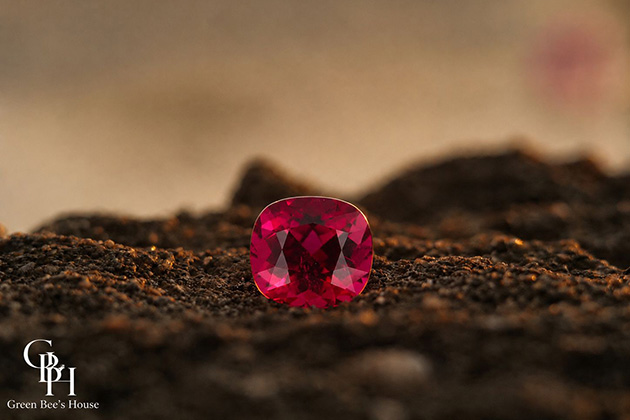
Among the luminous members of the Tourmaline family, rubellite emerges as a mineral bloom of vivid pink and red hues that recall ripe pomegranates and glowing sunsets. Each gem shimmers with vitality and refinement, its purplish highlights evoking both passion and poise. Celebrated for its saturated tone, crystalline purity, and enduring charm, rubellite remains a jewel of expressive elegance.
Rubellite, an eye-catching pink to red variety of tourmaline, was first celebrated in gem history for its remarkable color and gem-quality crystals. The name “rubellite” is derived from the Latin rubellus, meaning reddish, reflecting the gem’s alluring shades. Today, rubellite’s vivid hues continue to emerge from storied soils—Brazil’s Minas Gerais, Mozambique’s Alto Ligonha, Nigeria’s crimson-rich veins, and the historic mines of Madagascar, Afghanistan, and the United States, where California and Maine still whisper their mineral legacy.
Throughout history, ancient cultures believed that rubellite ignites passion and creativity, often associating it with the heart and emotions. Its natural brilliance and enchanting tones have secured its place as a favorite in high-end jewelry for years.
Rubellite measures 7 to 7.5 on the Mohs scale, making it a suitable choice for everyday jewelry. Its sturdy crystal structure resists scratches and wear, yet care should be taken to avoid sharp impacts or extreme temperature changes. The durability of rubellite ensures that its vivid charm will remain unaltered for generations.
The rubellite captivates with its intense spectrum, ranging from delicate pink to deep raspberry red, and even electric magenta. This rich coloration is caused by traces of manganese within the crystal structure of the tourmaline. The most sought-after rubellites display a bright, uniform color, exceptional transparency, and an inner glow that sets them apart from other red stones.
The finest specimens are typically free of visible inclusions, although some, such as fine tubular or needle-like inclusions, are common and accepted in the trade. These characteristics indicate the stone's natural origin and give each gem its individuality, which appeals greatly to enthusiasts of expressive jewelry.
As a member of the tourmaline family, rubellite is an alternate birthstone for October. In crystal healing traditions, rubellite is believed to encourage emotional healing, self-love, and free expression of affection. It symbolizes vitality, compassion, and an enthusiastic heart, making it a thoughtful gift.
"As a member of the tourmaline family, rubellite is an alternate birthstone for October. In crystal healing traditions, rubellite is believed to encourage emotional healing, self-love, and free expression of affection. It symbolizes vitality, compassion, and an enthusiastic heart, making it a delicate gift."
The rubellite enchants with its fiery, vibrant, and captivating color. Its lasting brilliance offers timeless elegance. Its rich chromatic spectrum, ranging from delicate pink to deep red, makes it a highly prized gemstone. Its authentic composition, often marked by natural inclusions, attests to its origin and exceptional character. With its hypnotic depth and lively energy, the rubellite remains a precious symbol of passion and vitality, adding an extraordinary touch to any jewelry collection.
Spessartite: Born of Flame and Earth
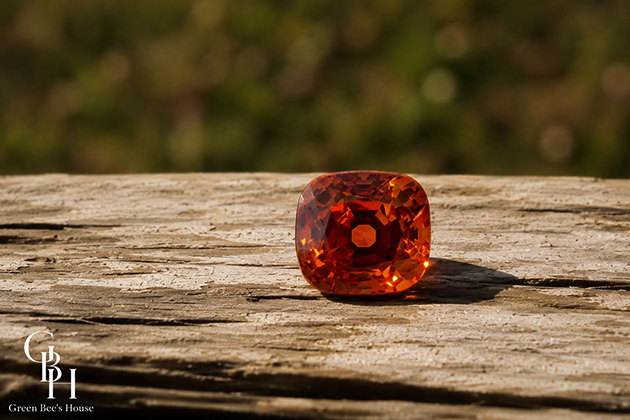
Among the most vibrant members of the garnet family, spessartite captivates the eye with its bright orange to reddish-orange hues, reminiscent of glowing embers and a blazing sky, where orange and red merge into a fiery, almost mineral light. Each stone pulses with vitality and refinement, its incandescent tones conjuring a sense of movement and inner fire. Celebrated for its intense saturation, brilliant clarity, and enduring charm, spessartite is a gem of bold, expressive beauty.
Spessartite, a striking orange variety of garnet, was first described in the Spessart region of Bavaria, Germany, from which it takes its name. Today, its vivid hues come from several regions worldwide: the major deposits in Nigeria and Namibia are particularly renowned for mandarin‑colored spessartites, while Mozambique, Madagascar, and Brazil also produce quality specimens. Tanzania has recently emerged as a source of vibrant orange spessartites, notably from the Loliondo and Sinoniki regions, though production remains limited. Occurrences are also found in Myanmar, Sri Lanka, the United States (California, Virginia), and Pakistan, though these sources are generally less significant commercially.
Spessartite has long been prized for its vivid hue and innate brilliance. In ancient traditions, garnets were said to inspire confidence, creativity, and courage, making them coveted gemstones for both adornment and protection. Often associated with the fire element, spessartite was thought to awaken inner vitality and ignite the imagination, lending emotional warmth and boldness to those who wore it.
Spessartite measures 7 to 7.5 on the Mohs scale, making it well suited for daily wear in jewelry. Its robust crystal structure offers good resistance to scratching and abrasion, though care should be taken to avoid sharp blows or extreme temperature fluctuations. With proper setting and care, the impressive durability of spessartite can help ensure its fiery brilliance endures for generations.
Spessartite captivates with a radiant spectrum of orange tones — ranging from soft mandarin to intense apricot, occasionally accented by warm red or brown reflections. Its striking vibrancy is owed to the presence of manganese. The most sought-after specimens display a vivid, even color, exceptional clarity, and remarkable brilliance that set them apart from other orange gemstones. High-quality stones are typically transparent and free of visible inclusions, though fine needle-like features or a subtle “sugary” texture may appear, adding to the gem’s distinctive character. Ideal for standout jewellery creations, spessartite brings vivid color and timeless elegance to any collection.
As a member of the garnet family, spessartite is an alternative birthstone for January. In crystal-healing traditions it is said to boost confidence, stimulate creativity, and inspire joyful energy. Symbolizing optimism, enthusiasm, and boldness, it makes a thoughtful, empowering gift.
Spessartite captivates with its vibrant, cheerful orange hues - from gentle apricot to fiery mandarin - and offers enduring brilliance and timeless sophistication. Its natural composition, often marked by subtle inclusions, attests to its origin and unique character. With an energizing presence and lively appeal, spessartite remains a treasured symbol of creativity and vitality, bringing a burst of color to any jewelry collection.
Spinel: A Symphony of Sparkels
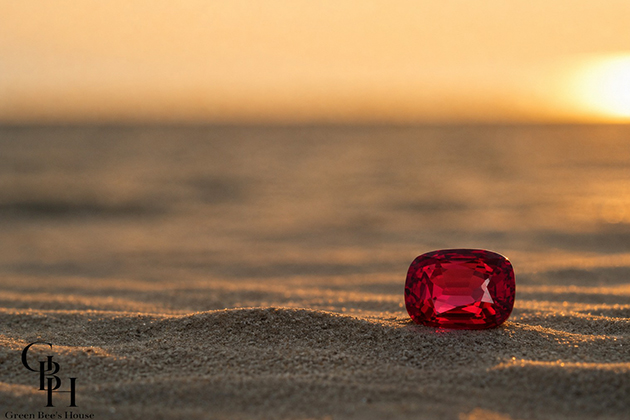
Discover the intense beauty of spinel, one of the most captivating and dazzling gems on the market. Renowned for its brilliance and vibrant colors - from deep ruby red to soft violet and opaque black with a silvery glint - spinel embodies rare elegance and striking splendor. With exceptional clarity, outstanding durability, and timeless charm, this mesmerizing stone is the ideal choice for those seeking a unique piece that blends sophistication with passion.
Spinel has been cherished for centuries, with many historic gemstones once thought to be rubies actually discovered to be spinels. The name is thought to originate from the Latin spina, meaning “thorn”, a reference to the gemstone’s sharply pointed crystal formations. Some scholars also suggest a Greek origin, from spinther, meaning “spark” or “scintillation,” evoking the vivid brilliance and fiery luster that characterize the finest specimens. Major deposits are found in Myanmar (Burma), Sri Lanka, Vietnam, and Tanzania, with additional sources in Afghanistan, Pakistan, and Madagascar. Further occurrences have been reported in Australia, Brazil, the United States, Nepal, Nigeria, and Thailand, each offering spinels with distinctive hues and geological signatures.
Historically, spinel adorned royal crowns and treasures - the famous “Black Prince’s Ruby” in the British Imperial State Crown is a notable example. Its enduring presence in legendary jewels speaks to its lasting value and its association with protection, vitality, and nobility.
Spinel registers 8 on the Mohs scale, offering exceptional resistance to scratching and wear. This makes it an excellent choice for everyday jewelry, maintaining its polish and brilliance over time. While highly durable, it is still best to avoid exposure to harsh chemicals and extreme impacts to preserve its beauty for generations.
Spinel captivates with a rainbow of vivid colors - from classic red, pure pink, rich blue, and lively orange, to mysterious purple and even deep black. Its striking saturation results from trace elements such as chromium, iron, and cobalt. The most prized specimens display an intense, even shade and exceptional clarity. High-quality spinel is typically transparent and free of visible inclusions, though minute crystals or a silky texture may sometimes enhance its character.
Myanmar (Burma) is famed for its legendary “ruby-red” spinels, while Sri Lanka yields delicate pinks and pastel lavenders. Vietnam offers vibrant pinks and rich reds, often with remarkable brilliance. Tanzania and Nigeria produce deep purples and dramatic blacks, while Madagascar reveals a spectrum from vivid orange to cobalt blue. Afghanistan and Pakistan are known for their fiery reds and elegant pinks, and Thailand contributes warm-toned spinels from alluvial deposits.
Spinel was recently designated as an alternative birthstone for August. In crystal healing, it is said to promote revitalization, resilience, and emotional balance; its energy is linked to passion, creativity, and inspiration. Whether gifted or kept close to the heart, spinel whispers of strength reborn, serenity reclaimed, and the quiet fire that lives within.
Spinel enchants with its palette of intense, vibrant hues - from fiery red to soothing blue, it offers lasting brilliance and timeless elegance. Chosen with care, worn as a promise, it embodies both renewal and remembrance - a mirror of strength, serenity, and inner transformation. At once versatile and refined, spinel brings a singular touch to every jewelry creation - a gem of fire, mystery, and profound beauty.
Tanzanite: A Gemstone of Rare Beauty
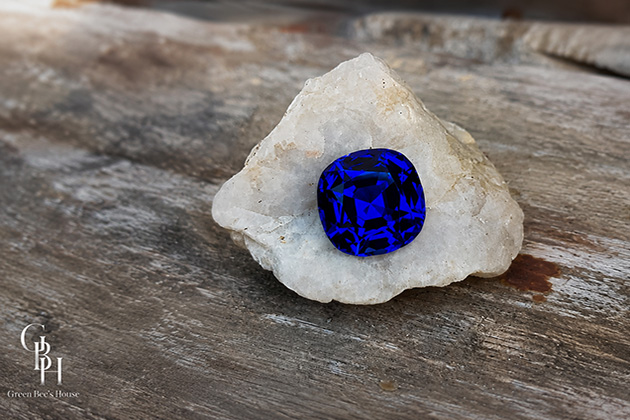
From the shadowed slopes of Mount Kilimanjaro, where ancient earth meets celestial light, emerges tanzanite, a captivating blue-to-violet variety of zoisite — a gem of rare enchantment, that has quickly become one of the most sought-after gemstones in the world. Its shifting shades of indigo, violet, and royal blue seem to echo the sky at dusk, whispering of transformation and inner clarity. Discovered only recently, yet timeless in its allure, tanzanite invites the soul to wander, to wonder, and to wear a fragment of the sublime.
Tanzanite is a rare gemstone, sourced from an exceptionally limited mining area located in the Simanjiro district of the Manyara region in northern Tanzania, near the Mererani Hills. This exclusive deposit, roughly 7 kilometers long and 2 kilometers wide, endows tanzanite with extraordinary rarity. Each gem extracted from this volcanic land is thus regarded as a unique treasure.
In 1967, according to widely circulated accounts, a member of the Maasai tribe — often identified as Ali Juuyawatu — discovered striking blue-violet crystals emerging from the earth. He reportedly shared his find with Manuel de Souza, a tailor and amateur prospector who had been searching for rubies in the region. Initially mistaken for sapphires, the stones were soon identified as a previously unknown variety of zoisite.
Named “zoisite” in honor of Austrian mineralogist Sigmund Zoïs von Edelstein, the gem was later rebranded as “Tanzanite” by Tiffany & Co. for commercial purposes. Introduced to the market in 1968, tanzanite sparked immediate enthusiasm. Tiffany presented it as “the most beautiful blue gemstone discovered in 2,000 years,” marking its dazzling debut in the world of high jewelry.
On the Mohs scale of mineral hardness, tanzanite ranks between 6.5 and 7. While it is not as hard as diamonds or sapphires, it still offers a moderate degree of durability. However, due to its relative softness and pronounced cleavage, care should be taken to avoid scratches, abrasions, and sudden impacts. For this reason, tanzanite is best suited to pendants and earrings, where it is less exposed to daily wear and tear.
Tanzanite is the blue to violet variety of the mineral zoisite, a calcium aluminium hydroxyl sorosilicate. Its distinctive hues are due to trace amounts of vanadium within its crystal structure. The color spectrum of tanzanite ranges from royal blue and indigo to violet and deep purple.
What truly sets tanzanite apart is its pronounced trichroism — the ability to display three distinct colors (blue, violet, and burgundy) depending on the crystal orientation. This optical phenomenon, known as pleochroism, causes the gemstone to shift in color based on the angle and type of light. Under fluorescent lighting, tanzanite tends to appear more blue, while incandescent light enhances its violet tones.
In terms of market value, the most desirable tanzanites exhibit a rich, saturated royal blue with subtle violet undertones. These stones are especially sought after for their resemblance to fine sapphires, yet with a unique vibrancy and depth. Bluish-violet tanzanites — those that blend both hues harmoniously — are also highly prized. Lighter tones or stones with low saturation tend to be less valuable, as they lack the vivid intensity that collectors and jewelers favor.
Tanzanite’s captivating beauty, exceptional rarity, and remarkable optical properties make it a gemstone unlike any other. From its mesmerizing color shifts and pronounced trichroism to its singular geographic origin and storied discovery, tanzanite has won the hearts of gem lovers and collectors around the globe.
Whether showcased as a delicate pendant, a pair of refined earrings, or a bold statement ring, tanzanite continues to enchant and inspire, establishing itself as one of the most iconic gemstones of our time.
Emeralds, with their rich history, unique properties, and captivating beauty, continue to be one of the most sought-after gemstones in the world. From ancient civilizations to modern-day collectors, the allure of emeralds remains timeless. Whether valued for their vivid color, unique inclusions, or the skilled craftsmanship required to cut and polish them, emeralds are a true testament to the wonders of nature.
Topaz: The Signature Glow of Elegance
Topaz is more than a mineral — it’s a luminous gift from the depths of the Earth, shaped by pressure, time, and elemental magic. Born in fiery geological chambers and kissed by fluorine-rich environments, each crystal carries within it a story of transformation. Renowned for its captivating palette — from oceanic blues to sunset oranges, soft greens to blush pinks — Topaz enchants collectors and designers alike. Whether set in fine jewelry or admired as a collector’s treasure, Topaz offers a radiant harmony between nature’s artistry and human refinement.
The name “Topaz is” believed to derive from Topazios, the ancient Greek name for the island now known as Zabargad or St. John's Island, located in the Red Sea. Ironically, the yellow gems once mined there were likely not true topaz, but peridot. Still, the name endured, carried through time by the enduring allure of radiant, sun-kissed stones.
From antiquity to modern times, Topaz has been revered for its luminous beauty and symbolic power. In ancient Greece, it was believed to enhance strength and offer protection. The Egyptians associated it with the sun god Ra, admiring its radiant hues as a divine embodiment of solar energy. During the Middle Ages, Topaz was treasured as a talisman, thought to heal both physical and emotional ailments, and to sharpen wisdom. Its mystical reputation continued to flourish, culminating in the 18th century when Topaz gained prominence in European royal courts — especially under the Portuguese crown, where it adorned regal jewels and ceremonial ornaments.
Topaz is extracted through two principal methods: open-pit mining, which removes layers of earth to uncover deep-seated deposits, and alluvial mining, which gently retrieves crystals from riverbeds and stream gravels, where erosion has naturally set them free. Today, Topaz is found across the globe, with Brazil and Russia standing out as the most prolific sources. Other notable sources include the United States (especially Texas and Utah), Mexico, Pakistan, Afghanistan, Sri Lanka, Japan, Australia, Myanmar (Burma), Zimbabwe, and Madagascar. Each origin lends its own nuance of color and character, making Topaz a truly global gem — shaped by nature’s forces.
Naturally brilliant and impressively durable, topaz boasts a Mohs hardness of 8 — making it one of nature’s toughest gemstones. Ideal for everyday elegance, its radiant clarity and vibrant hues have made it a favorite among jewelry lovers, from sleek solitaires to bold statement pieces.
To preserve its beauty, just a touch of care is enough: avoid harsh chemicals, and clean gently with mild soap and a soft brush.
Topaz is a fascinating silicate mineral composed of aluminum and fluorine. Its chromatic diversity stems from atomic imperfections and the presence of trace impurities within its crystal structure. For example, the rare natural blue topaz often results from the irradiation and heat treatment of colorless stones, while brown and golden hues are generally associated with iron.
In its pure state, topaz is colorless. However, the introduction of elements such as chromium, iron, or titanium can generate a rich palette of shades: white, blue, brown, orange, gray, yellow, yellowish brown, green, pink, reddish pink, and red. This ability to display varied colors — known as allochromatic behavior — gives topaz its versatility and makes it a highly sought-after gemstone.
In high jewelry, the most coveted topazes are natural and rare varieties, such as imperial topaz with its golden and rosy tones, or the exceptionally rare red and pink topazes. Treated blue topazes, like Swiss Blue and London Blue, are appreciated in fine jewelry, but do not meet the standards of natural origin and exclusivity required for noble gemstones.
Topaz is the birthstone for November. It is often associated with qualities such as love, affection, and good fortune. As a birthstone, topaz is believed to bring wisdom, clarity, and warmth to those born in this month.
In lithotherapy, topaz is valued for its purported abilities to promote emotional balance and enhance one's happiness and confidence. It is thought to stimulate creativity, improve concentration, and help in manifesting one's intentions into reality. Topaz is also believed to provide protection against negative energies and to aid in spiritual rejuvenation.
Topaz remains one of the most revered gemstones, admired for its exceptional hardness, rich palette of colors, and storied past. Whether natural or enhanced, its brilliance and symbolic resonance—evoking love, creativity, and emotional healing—continue to enchant gem enthusiasts and jewelry connoisseurs alike. With its enduring beauty and remarkable versatility, topaz is destined to remain a treasured presence for generations to come.
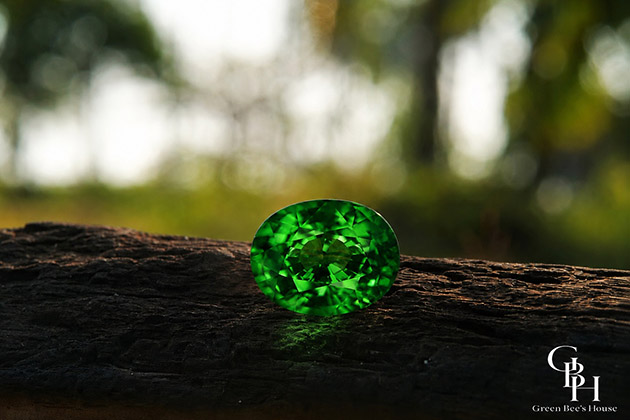
Tsavorite: Timeless Brilliance in a Gemstone Garden
Tsavorite, a gemstone of striking intensity, captivates with its brilliant green hue — both vivid and profound. Discovered in the 1960s in the heart of the African landscape, this rare gem boasts a fascinating history and exceptional properties that set it apart in the world of fine stones. Also known as “tsavolite”, it belongs to the garnet group, specifically to the grossular species. This calcium-aluminum garnet displays a unique radiance, often compared to the finest emeralds — yet it offers superior brilliance and durability.
A gem revealed by nature and human audacity, tsavorite was discovered in 1967 by British geologist Campbell R. Bridges, in the mountainous Simanjiro district of northeastern Tanzania. The crystals he unearthed, with their vivid green hue and remarkable transparency, quickly drew the attention of the gemological world. Despite initial setbacks due to export restrictions, Bridges later identified additional deposits in Kenya. Long known only to mineral specialists, tsavorite gained wider recognition in 1974 when Tiffany & Co launched an international campaign and named the gem in tribute to Kenya’s Tsavo East National Park.
Beyond its Tanzanian and Kenyan origins, tsavorite is also found in Madagascar, Pakistan, and even Antarctica. These sources have helped expand its availability while preserving its status as a rare stone.
With a hardness of 6.5 to 7.5 on the Mohs scale, tsavorite stands out for its durability. This characteristic makes it a wise choice for jewelry intended for daily wear, such as rings, earrings, or pendants. Its resistance to scratches and ability to retain its polish make it a gemstone as enduring as it is elegant.
Tsavorite captivates with its fire and shimmering reflections, revealing a green of rare intensity whose palette ranges from bright, radiant tones to deep, luxuriant forest hues. This striking shade is the result of natural traces of chromium and vanadium, which endow the gem with its vivid and distinctive saturation.
The most sought-after specimens display a rich, vibrant hue, enhanced by exceptional clarity that evokes the finest emeralds. Combining beauty, rarity, and remarkable durability, tsavorite stands out as an exceptional gemstone — ideal for refined and timeless jewelry creations.
A symbol of regeneration and pure energy, tsavorite — a rare and radiant green garnet — is the birthstone associated with the month of May. It embodies growth, prosperity, and inner harmony.
In crystal healing, tsavorite is celebrated for its revitalizing properties: it boosts vitality, strengthens self-confidence, and promotes emotional balance. It helps dissolve energetic blockages while awakening intuition and mental clarity. To offer or wear a tsavorite is to invite light, strength, and serenity into everyday life.
A brilliant Future for a rare gem. From its discovery in the Tanzanian mountains to its rise on the international jewelry scene, tsavorite embodies beauty, rarity, and fascination. Its vibrant green hue, exceptional hardness, and distinctive story captivate connoisseurs. Crystals of several carats remain exceedingly rare. As exploration continues and interest grows, tsavorite is securing its place among the world’s most coveted gemstones — promising a future as luminous as its fire.
 WhatsApp

